
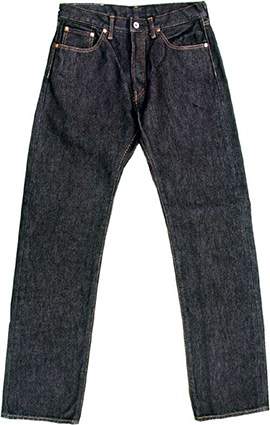
Since were on the topic of Denim i thought i would do a post on Selvedge denim
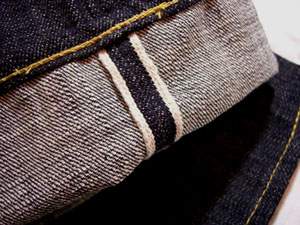
Selvage denim (also called selvedge denim) is a type of denim which forms a clean natural edge that does not unravel. It is commonly presented in the unwashed or raw state. Typically, the selvage edges will be located along the out-seam of the pants, making it visible when cuffs are worn. Although selvage denim is not completely synonymous with unwashed denim, the presence of selvage typically implies that the denim used is a higher quality.
The word "selvage" comes from the phrase "self-edge", the natural edge of a roll of fabric. In this case, denim made on old-style shuttle looms. These looms weave fabric with one continuous cross thread (the weft) that is passed back and forth all the way down the length of the bolt. As the weft loops back into the edge of the denim it creates this “self-edge” or Selvage. Selvage is desirable because the edge can’t fray like lower grade denims that have separate wefts which leave an open edge that must be stitched. Shuttle looming is a more time-consuming weaving process that produces denim of a tighter weave resulting in a heavier weight fabric that lasts.
Shuttle looms weave a more narrow piece of fabric, and thus a longer piece of fabric is required to make a pair of jeans (approximately 3 yards). To maximize yield, traditional jean makers use the fabric all the way to the selvage edge. When the cuff is turned up the two selvage edges, where the denim is sewn together, can be seen. The selvage edge is usually stitched with colored thread: green, white, brown, yellow, and red (red is the most common). Fabric mills used these colors to differentiate between fabrics.
Most selvage jeans today are dyed with synthetic indigo, but natural indigo dye is available in smaller niche denim labels. Though they are supposed to have the same chemical makeup, there are more impurities in the natural indigo dye. Loop dying machines feed a rope of cotton yarn through vats of indigo dye and then back out. The dye is allowed to oxidize before the next dip. Multiple dips create a deep dark indigo blue.
In response to increased demand for jeans in the 1950's, American denim manufacturers replaced the old shuttle style looms with modern projectile looms. The new looms produced fabric faster and wider (60-inches or wider), yet lighter and less durable. Synthetic dyeing techniques along with post-dye treatments were introduced to control shrink and twist.
What is Selvage Denim?
Only the finest jeans are made of selvage denim.
Selvage denim is made on old-style shuttle looms rather than modern, projectile looms. In simple terms, this means during the fabric weaving process, the cross-thread goes back and forth as one continuous thread, rather than as individual threads for each cross weave. As a result, selvage denim has a clean edge. Modern, single thread weaving has a frayed edge.
Traditionally the fabric made on shuttle looms was so narrow, a pair of jeans required approximately 3 yards of fabric. To maximize yield, jean-makers used the fabric all the way to the selvage edge with a straight outside seam. When the cuff is turned up, the two selvedge edges, where the denim is stitched together, can be seen (it's also seen on the inside of the coin pocket). The selvage edge is usually stitched with a colored thread and on vintage jeans, you'll find red, white, green, brown or yellow thread running down the edge, the most common being red. This distinction was made by fabric mills to differentiate between fabrics. True vintage jeans can be recognized the selvage edge.
Japanese selvage denim is the finest and most rare on the market today.
Historically, American denim was considered superior. In time, however, because shuttle looms only made 30-inch wide cloth, they became obsolete. In the 1950’s, when American jean manufacturers saw demand for their product skyrocket, they searched for faster, less expensive methods for producing denim fabric. They mothballed the traditional shuttle-type looms in favor of modern, projectile looms which could make a 60-inch wide fabric (or wider) for much less money. The fabric produced, however, was lighter and less durable. Manufacturers also replaced real indigo dye with synthetic substitutes and began pre-washing all fabric in order to control shrink and twist. The byproduct of these changes was an article lacking character with no potential for greatness.
Three decades later, select Japanese companies saw a market for traditionally made denim. They bought up most of the old, American shuttle looms and began crafting denim for small, local clothing companies. When the “Premium Denim” craze began, a few forward thinking companies introduced jeans made of selvage denim dyed with real indigo.
Quality denim is indigo dyed using loop dying machines which, like the looms, are rare and ancient machines., They feed a rope of cotton yarn through vats of indigo dye and then up to the roof of the factory to allow the indigo to oxidize before the 'rope' goes back down into the next vat. Some brands use up to 30 dips, creating a rich, deep indigo blue color with excellent character.
As for the raw materials, the best manufacturers use 100% cotton threads, which though they break more easily during the sewing process, are more authentic. Other original production techniques are reproduced at every stage, including the chain stitch at the leg opening which gives a thick stitch-line at the hem. This stitching requires a special machine, which again, has not been produced for the past 40 years. Whenever possible, superior denim manufacturers use Union Special brand machines, the "Rolls Royce" of American sewing machines from the fifties.
The immense care put into the detailing of this unique denim fabric, from the raw material to the weaving, dying and stitching, creates a jean of exceptional quality. Denim produced on shuttle looms is naturally irregular and these irregularities are enhanced as the jeans age, causing every pair to develop a unique and beautiful pattern as it fades. The deep blue color and the way the jeans fade can only be achieved by using the loop dying system. These details give the jeans authenticity and give you the knowledge that you own an article of the highest quality. Like fine wood, jeans made of selvage denim will only become more beautiful with age and wear, acquiring a patina unique to the wearer that is impossible to reproduce artificially. Each pair transforms in to a one of a kind piece. Owning and wearing jeans made of selvage denim is a very personal experience that no other item of clothing can give you.


 << onblur="try {parent.deselectBloggerImageGracefully();} catch(e) {}" href="http://www.zappos.com/images/747/7474811/6627-762760-p.jpg">




 Posts
Posts


